Compare services
Choose a starting point for your collection. You can source a blank, brand an existing style or develop a garment from your own pattern.

Wholesale blanks
An undecorated garment in an existing fit.

Logo & private label
An existing silhouette with your own artwork and labels.

Custom cut & sew
Your own pattern, proportions or garment construction.
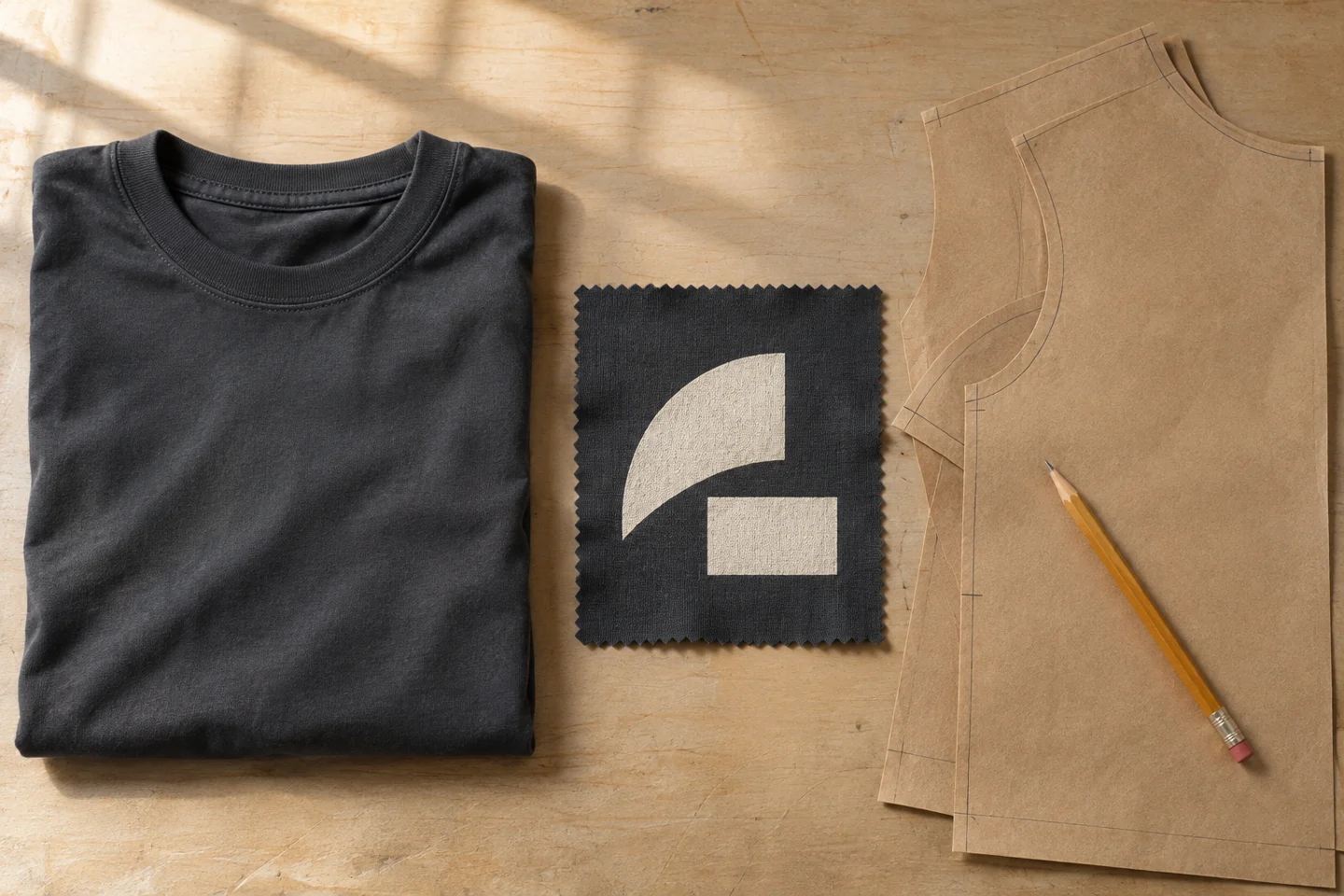
One black tee, three different orders
A print shop needs black tees for an event and will print them locally. Its first decision is whether the available cut, fabric and size mix suit the job. A physical blank gives the printer something to wear, measure and test on press.
A clothing brand likes the same tee but wants its own chest graphic and neck label delivered on the finished garment. Start with private label. Ask to see the graphic at the ordered size on the chosen fabric, then check its position on a complete tee.
A designer wants a wider chest, a shorter body and a sleeve that ends closer to the elbow. Start with cut and sew. Mark those changes on a reference tee and agree the base-size measurements before paying to develop the decoration.
Sampling and order terms
| Order detail | Wholesale blanks | Logo & private label | Custom cut & sew |
|---|---|---|---|
| Minimum order | Depends on the base style and available colors. | Depends on the base garment, artwork and label run. | Depends on fabric sourcing and the quantity per color. |
| Sampling | Request a blank to check the fit and fabric. | Timing follows artwork review and selection of the base garment. | Timing follows pattern review, fabric selection and wash trials. |
| Sample fee | Quoted for the selected garment and delivery address. | Based on the blank, decoration setup and custom labels. | Quoted for pattern development, materials and sample work. |
| Bulk order | Request availability and a dispatch estimate for your size run. | Quoted by piece count, decoration placements and packing. | Price and production dates follow sample approval and final quantities. |
Which sample answers your buying question?
If fit is settled and color is open, request a swatch of the proposed fabric or a dye sample, often called a lab dip. Compare it with the physical color reference under the lighting you both agree to use. A flat swatch can settle a shade decision. You still need the complete garment to judge how it hangs.
For decoration, a strike-off is a trial print and a sew-out is a stitched trial of the embroidery. Mark the artwork version, size and fabric on the approved piece. For an original silhouette, review a fit sample on the body first. When fabric, trims, artwork and fit are settled, agree which finished sample will be the reference for production.
How to compare two quotes for the same brief
To compare another offer with a quote from TOPSHOW, give both suppliers the same garment description, color and size breakdown, decoration dimensions, packing instructions and ship-to location. Ask each to separate the unit price from sample work, artwork setup, labels, packing and freight. Record what each quoted price actually covers before comparing totals.
For example, a 240-piece request split across two colors could mean 120 pieces in each color or 200 black and 40 stone. Write out the split and the sizes within each color. Ask which colors and sizes can be supplied together, which materials need sourcing, and whether a smaller color run changes the quote.
Separate sample approval, production completion, dispatch and delivery on the calendar. If the launch date is fixed, ask which milestone depends on your sign-off and what happens to the estimate if the first sample needs revision.
What to keep for a repeat order
Keep the approved style reference with a dated photo and the final order breakdown. For a blank, record the base style, color and size sheet. For a branded garment, add the artwork file version, actual logo dimensions and approved label proof. For cut and sew, keep the measurement chart, materials list and comments from the last fitting.
On a reorder, mark every change against that record. Use the eagle print on our washed hoodie as a reference for ink coverage on a washed ground. A new body color can change how a pale print looks. A new fabric can change the fit after washing even when the paper pattern stays the same. Ask for a new proof of the affected detail and confirm availability before treating a repeat as identical.